The art form, and what to expect
What is burlesque? A first-timer's guide
Where burlesque comes from, how a modern show works and who is on stage at the Mirage in Vienna, drawn from encyclopedic and venue sources.
See Burlesque Ohlala tickets on GetYourGuide ↗Quick answer
Burlesque began as a comic imitation that mocked serious works, grew into a theatre and variety format in the 19th century, and was revived from the 1990s as a stylish, humorous form of stage tease with costume, dance and music. At the Mirage in Vienna, Cirque Rouge stages a modern version on Wednesdays: a ringmaster, rotating guest artists, a live jazz band and a four-course dinner, hosted in English.
Burlesque in short
| In a line | |
|---|---|
| The word | From Italian burla, a joke |
| It began as | Parody of serious works |
| Later | US variety shows, 1860s on |
| Revival | Neo-burlesque, from the 1990s |
| At the Mirage | Cirque Rouge, live jazz |
What the word means
Burlesque is a French word, taken from the Italian burlesco, which comes from burla, meaning a joke, ridicule or mockery. In its first sense it describes a work meant to cause laughter by caricaturing the manner or spirit of serious works. English has used the word this way since the late 17th century, for poems, plays and music alike. That is the root of the humour in every later version: burlesque starts from the idea of taking something grand and playing with it. The same word is used in music, where a burlesque movement is a bright, high-spirited piece, so you may meet it outside the theatre too.
Victorian burlesque: parody on stage
In London theatres between the 1830s and the 1890s, burlesque meant musical comedy that parodied a well-known opera, play or ballet, often in rhyming couplets packed with puns. The shows mocked the conventions of the original and quoted from it. Women played male roles in tights, but the plays themselves were seldom more than modestly risqué. Madame Vestris was staging burlesques at the Olympic Theatre from 1831. The form fell out of fashion in London in the early 1890s, when musical comedy took over.
The American variety show
Burlesque crossed to New York in the 1840s, and the British troupe Lydia Thompson and the British Blondes made it a hit from 1868. American shows settled into a three-part shape: comic sketches first, then a mix of acts such as acrobats and singers, then chorus numbers. Over time strippers replaced the singing and dancing performers, and names such as Gypsy Rose Lee and Sally Rand drew the crowds. In New York, the mayor clamped down, and by the early 1940s the format was effectively put out of business there.
The revival: neo-burlesque
From the early 1990s a new generation, nostalgic for the spectacle and glamour of the old shows, brought burlesque back, first in New York and Los Angeles. The revival is often called neo-burlesque. It covers anything from classic striptease to modern dance, theatrical mini-dramas and comedy, and the acts tend to be sexy rather than sexual. They may add cabaret, circus skills or aerial silk. Dita Von Teese is one of the best-known neo-burlesque performers. That mix of tease, humour and circus skills is what you will see in most modern shows.
Burlesque and stripping: the honest answer
They overlap, and the history explains why. American burlesque moved gradually towards striptease in the early 20th century, and striptease is still a common ingredient of a burlesque act today. What marks burlesque out is the build: elaborate costume, humour, a slow reveal and a performer in control of the pacing. The Mirage's own description stresses style, humour and interaction with the audience, and it promises glamour, seduction and Parisian decadence. The venue doesn't publish an act-by-act breakdown, so expect sensual numbers rather than a family show.
Who is on stage at Ohlala
Cirque Rouge, the company behind the show, says it has staged burlesque since 2010. Russell Brunner, billed as the Love Muscle, is the ringmaster and hosts in English, mixing physical comedy and dance. Kalinka Kalaschnikow, the company's grand dame, picks the performers each week and appears herself. The Cirquettes are the chorus line, known for their choreography and glamorous looks. Guest burlesque dancers, aerial artists and circus performers rotate, so the line-up changes from week to week, and the Randy Dandies, with Nobuo Watanabe, play live jazz that sets the atmosphere for the acts. The venue describes the guest artists as including international stars.
What to look for in an act
A few details separate burlesque from a plain dance show. Costume is part of the act, with feathers and sparkle doing as much work as the choreography. The venue's own description of the art form adds humour, music and acting to the mix, and says the artists involve the audience, breaking the fourth wall to create an intimate closeness. It also says performances often reflect social issues in a charming and ironic way. Expect the playful wink more than the shock.
Why a mirror tent
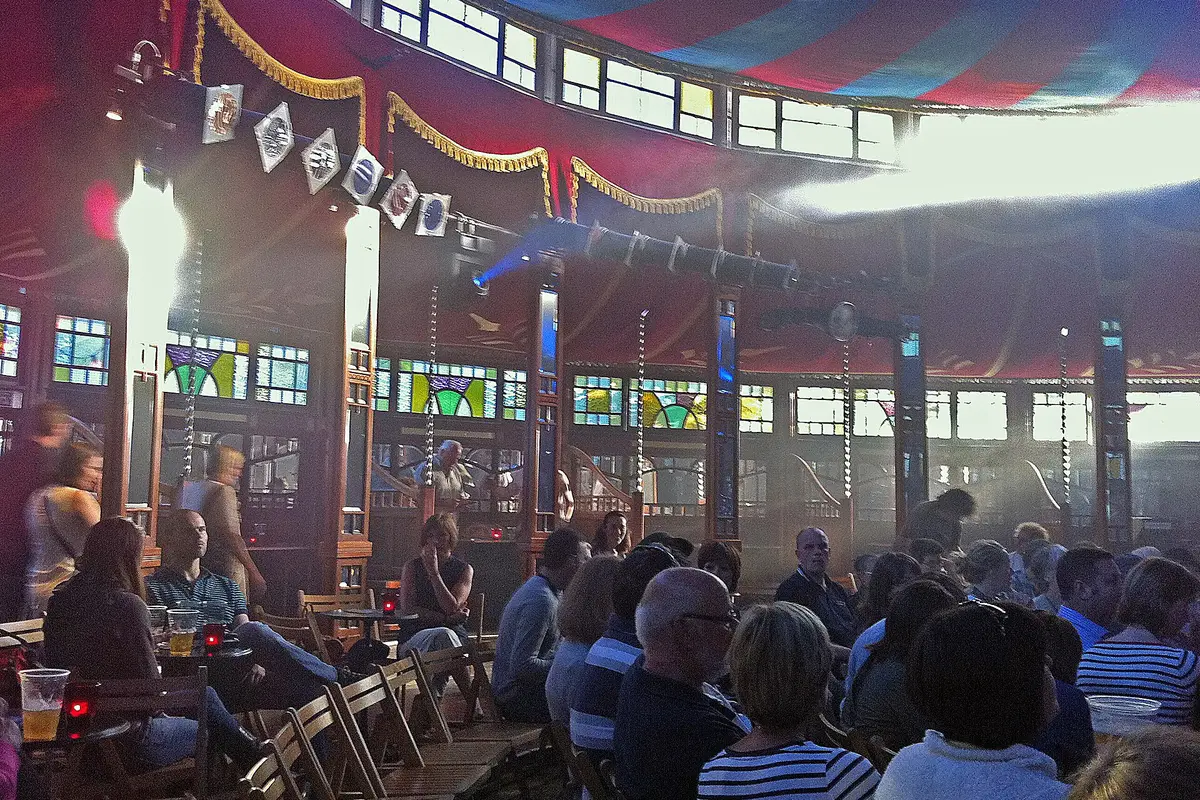
A spiegeltent, Dutch for mirror tent, is a large tent of wood and canvas decorated with mirrors and stained glass. The first ones were built in Belgium in the late 19th and early 20th centuries as travelling dance halls for town fairs, and only a handful of historic tents survive. The Mirage is a mirror tent in Vienna's Prater park, and the venue says the intimate setting brings the audience close to the performers. The room has lighting effects, a modern sound system, and heating and air conditioning all year.
How a night at the Mirage runs
The show, including the break, lasts about three hours. The moderation is in English, but the venue says it is only a small part of the show, so you don't need strong English to follow it. The four-course dinner is served around the performance: the first two courses as you arrive, the main course in the main break and dessert after the show. Small sweet and savoury extras also appear through the night. Afterwards you can meet the performers and take photos with them. Photos, filming and phone use are prohibited during the show itself.
Read next: Burlesque Ohlala at the Mirage: the evening, step by step
Practical points for first-timers
A few rules help a first visit go smoothly. The dress code is casual chic, and the ticket's house rules rule out a handful of items, listed below. Seats are assigned by category in advance and free seating isn't available, so there is no scramble for a good table, and there are no discounts for children, students or seniors. Arrive before dinner is served, because the first two courses come as you settle in, and your confirmation shows the time.
- Dress: casual chic, no shorts, sandals, sleeveless tops or sportswear
- Children: five and over, with a parent or guardian
- Cloakroom for coats and backpacks is mandatory
- Wednesday is Ohlala; Friday is a separate Dinner Club
Read next: Ohlala Vienna tickets: which seat to pick
Who this isn't for
If you want burlesque in its older, literary sense, a parody of a famous play, this isn't it: Ohlala is a cabaret-style variety show with dance, circus and music. If you would be uncomfortable with sensual costumes and audience interaction, skip it. If you want a quiet dinner, the show runs through the meal. And the venue doesn't admit children under five, so it isn't a family evening.
Frequently asked questions
What is burlesque in simple terms?
It is stage entertainment that mixes comedy, costume, dance and a teasing build-up. The word comes from the Italian burla, a joke, and began as parody of serious works before becoming a variety-show format and, later, the revival style seen today.
Is burlesque the same as stripping?
No, but they overlap. American burlesque moved towards striptease in the early 20th century, and striptease is still common in burlesque acts. Burlesque adds comedy, costume and the slow reveal. Modern shows are usually described as sexy rather than sexual.
Where does the word burlesque come from?
From French, which took it from the Italian burlesco, itself from burla, meaning a joke, ridicule or mockery. English has used the word since the late 17th century.
Do I need to speak English to enjoy the show at the Mirage?
No. The host speaks English, but the venue says that is only a small part of the show, and you can join in without special English skills.
What does a modern burlesque show include?
Acts can include striptease, elaborate costume, humour and cabaret, plus circus skills or aerial silk in the revival style. At Ohlala, the company also has a ringmaster, a chorus line, guest artists and a live jazz band.
Can I take photos at the show?
Not during it: the venue's terms prohibit photography, filming, audio recording and phone use during the show. You can take photos with the performers afterwards.
Sources